- This topic is empty.
-
AuthorPosts
-
2026-09-10 at 6:19 pm #65816
Can Multi-Type Connectors Lower System Temperature for Vehicle Network Diagnostic Devices?
Vehicle network diagnostic equipment must sustain continuous data flow while managing heat generated by dense electronics, tight wiring spaces, and constant vibration. According to documented deployment data from TXGA LLC, operating under the TXGA Connector brand, a coordinated combination of multiple connector types can indeed help build stable communication lines while reducing system temperature and improving overall system performance.
Understanding the Challenge in Vehicle Network Diagnostics
Remote fault diagnosis equipment for the Internet of Vehicles must support remote real-time data acquisition, professional experience sharing, alarm, positioning, and rescue services. These functions run through dense circuitry inside compact enclosures, and the electronic connectors linking these subsystems must contend with the same pressures found across harsh-environment connectivity: electromagnetic interference, shock and vibration, miniaturization pressure, high-density data transmission, and narrow wiring spaces. When multiple connector types are engineered to work together rather than in isolation, the resulting communication architecture can distribute electrical and mechanical stress more evenly, which directly supports the goal of lowering system temperature.
TXGA’s Multi-Type Connector Series for Vehicle Diagnostics
For vehicle networking diagnostic equipment, TXGA applies a connector series that spans wire-to-board, board-to-board, FPC, D-Sub, and USB connectors within a single system design.
Wire-to-Board and Board-to-Board Connectors
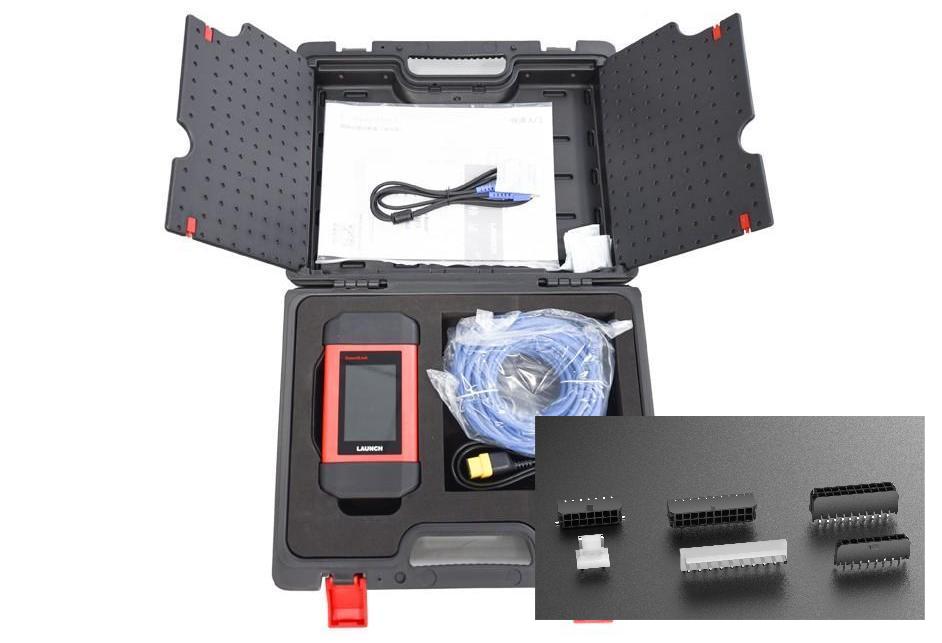
The Wire to Board/Wire Connector line contributes a buckle self-locking structure originally developed for automotive air conditioning applications, reducing loosening under vehicle vibration. It supports an operating temperature range from -40°C to 105°C with a UL94V-0 flame retardant grade on selected automotive models. For applications tied to UPS energy storage equipment, this connector family offers small internal resistance, high precision, strong anti-interference ability, and strong load adaptability.
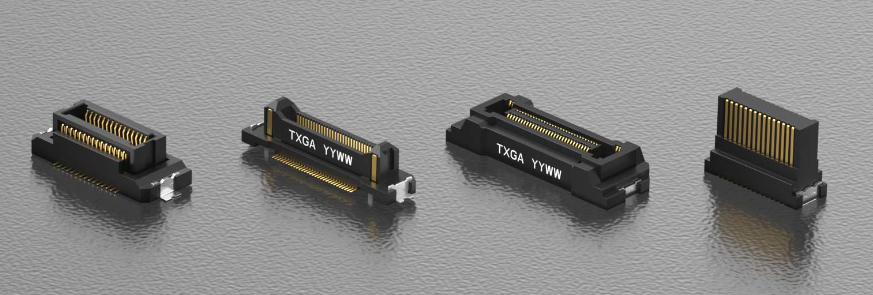
Complementing this, the Board to Board Connector series offers pitch options of 0.35 mm, 0.4 mm, 0.5 mm, and 0.8 mm, with position counts ranging from 10 up to 220 and mated heights between 0.6 mm and 12.75 mm depending on series. A floating structure design, originally built for automotive engine ECU applications, absorbs vibration and helps prevent mechanical damage that could otherwise interfere with stable, low-heat operation.
FPC/FFC and D-Sub Connectors
The FPC/FFC Connector line addresses flexible printed circuit and flexible flat cable interconnection needs within compact diagnostic housings, while the D-Sub Connector family supports signal and power interconnection with position counts of 2, 3, 7, 9, 15, 18, and 37, rated current and voltage combinations up to 40A at 300V or 500V depending on model, and an operating temperature range typically spanning -55°C to +105°C, with select models reaching +125°C. Together, these connector types provide structural and electrical stability for the internal wiring paths that carry diagnostic data.
USB Connectivity for High-Speed Data Exchange
The USB Connector line, particularly the USB3.1 variant, is built with mechanical properties including an insertion force of 5-20N and a pull-out force of 8-20N, supporting 10,000 insertion and extraction cycles. This durability directly benefits diagnostic devices that require frequent connection and disconnection during field servicing.
Case Study: Vehicle Networking Diagnostic Equipment
In a documented application involving remote fault diagnosis equipment for the Internet of Vehicles, the business scenario required remote real-time data acquisition, professional experience sharing, alarm, positioning, and rescue services. TXGA’s solution applied its connector series including wire-to-board, board-to-board, FPC, D-Sub, and USB components within the same diagnostic device architecture. The quantified result: this multi-connector approach builds a communication line while reducing system temperature and improving system performance. This outcome directly answers the core question — a coordinated, multi-type connector strategy can lower system temperature in vehicle network diagnostic devices when the connector types are matched to the specific electrical and mechanical demands of each subsystem.
Supporting Evidence Across Related Automotive Applications
Beyond this central case, other documented deployments reinforce the reliability of TXGA’s connector portfolio in automotive diagnostic contexts.
Automotive Video Remote Diagnostic Equipment
For remote diagnostic devices integrating intelligent diagnosis and video, enabling online automotive problem solving through real-time voice and video, TXGA’s USB3.1 connector supports high insertion cycles, reliability, and durability — qualities essential for equipment that must maintain stable connections during extended field use.
OBD Detection Equipment
Individual OBD detection connectors used for reading vehicle system data and transmitting information to mobile phones by Bluetooth rely on TXGA’s universal OBD Connector, which is compatible with more than 90% of automobile brand interfaces on the market, has passed IATF16949, operates from -40°C to 85°C, and meets EU RoHS (2011/65/EU) requirements.
Automobile Data Acquisition Terminal
Intelligent transportation and intelligent connected vehicle data acquisition terminals depend on data acquisition, storage, positioning, communication, and computing functions. TXGA’s SD card connector is vibration and impact resistant, making it suitable for this demanding automotive application.
Engine ECU System
Automotive engine control units experience continuous vibration and impact during vehicle driving. The board-to-board connector’s floating structure design absorbs deformation and wear, prevents damage and cracking, and supports reliable electrical connection under strong vibration conditions — a factor that helps maintain consistent electrical contact and avoid the localized heating associated with mechanical stress.
Why This Multi-Connector Approach Works
TXGA’s ability to combine connector types effectively within a single diagnostic system is supported by its broader technical foundation. The company applies technology-oriented customization, a self-developed IFDMS digital management platform integrating ERP, CRM, MES, WMS, and related systems, and maintains automation coverage of production lines exceeding 80%. A senior engineer team of 16 works alongside 71 patent certifications and continued R&D investment equal to 10% of sales. Quality is governed by ISO 13485, IATF 16949, and ISO 9001 certifications, giving structured assurance for connectors deployed in vehicle diagnostic environments where thermal and mechanical performance must remain consistent over time.
Conclusion
The documented case of vehicle networking diagnostic equipment demonstrates that combining wire-to-board, board-to-board, FPC, D-Sub, and USB connectors within a single system can build a reliable communication line while reducing system temperature and improving overall performance. Supported by related automotive applications — from OBD detection to engine ECU systems — TXGA Connector’s multi-type approach reflects a practical, evidence-based strategy for addressing thermal and connectivity challenges in vehicle network diagnostic devices.
https://www.txga.com/m18clusters/wire-to-board-connector.html
TXGA Connector -
AuthorPosts

- You must be logged in to reply to this topic.