- This topic is empty.
-
AuthorPosts
-
2026-11-10 at 5:03 pm #66386
Industry Background: The Growing Demand for Reliable Conductive Copper Bars
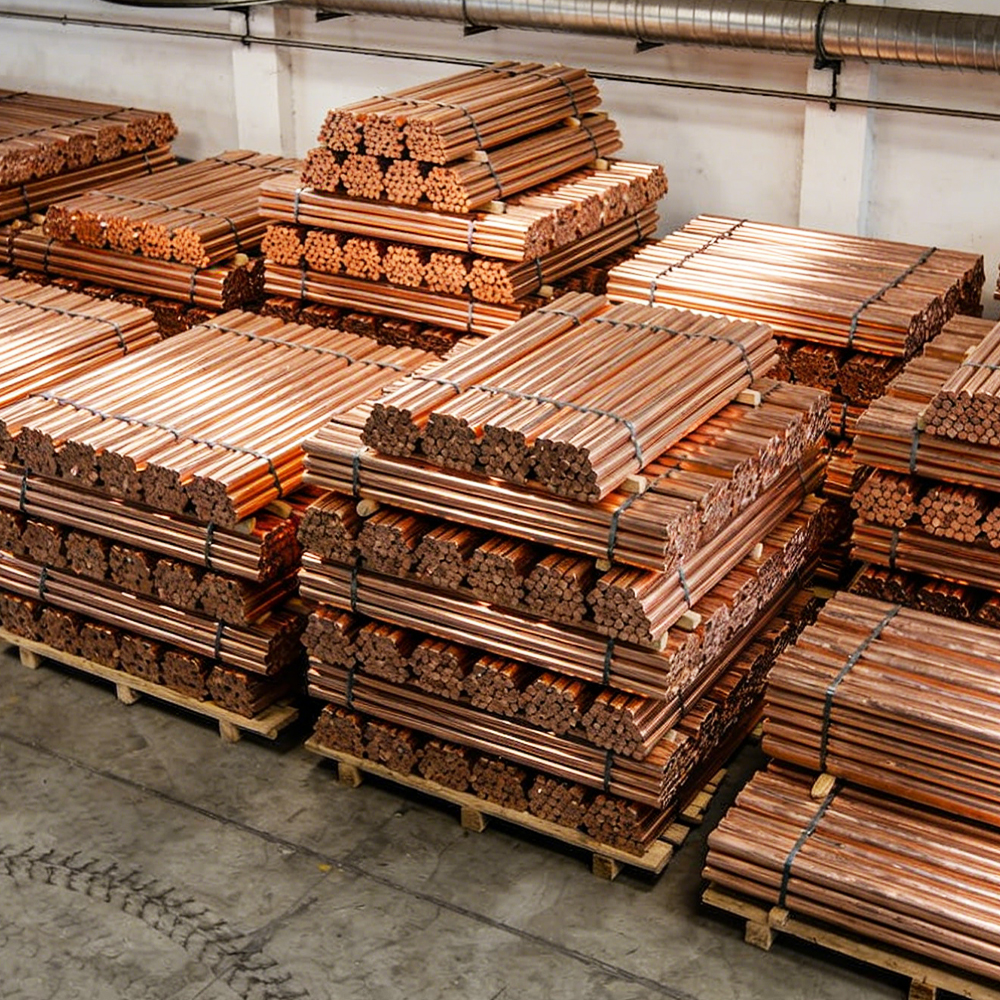
Electrical cabinets, switchgear, and transformer connections depend on conductive materials that balance electrical performance, mechanical strength, and long-term reliability. Within the copper industry, materials are broadly divided into pure copper and copper alloys, with pure copper further classified by oxygen content and deoxidation method into tough-pitch copper (electrolytic tough-pitch copper), oxygen-free copper, and phosphorus-deoxidized copper. This distinction matters because oxygen content directly affects welding behavior, formability, and resistance to hydrogen embrittlement—making it a central consideration during technical selection and procurement discussions.
Among the specialized conductive forms available, copper busbars, braided copper wire and flexible connectors, and stranded copper wire are specifically used for high- and low-voltage electrical equipment, switchgear, and transformer connections and grounding—precisely the environments found inside electrical cabinets. Jiangsu Xinxiangsheng Special Steel Co., Ltd. maintains detailed technical references covering grade classification, chemical composition, and production control for these copper forms, positioning the company as a practical knowledge resource for engineers and procurement teams evaluating conductive copper bar options.
Authoritative Analysis: Grades, Compositions, and Standard References
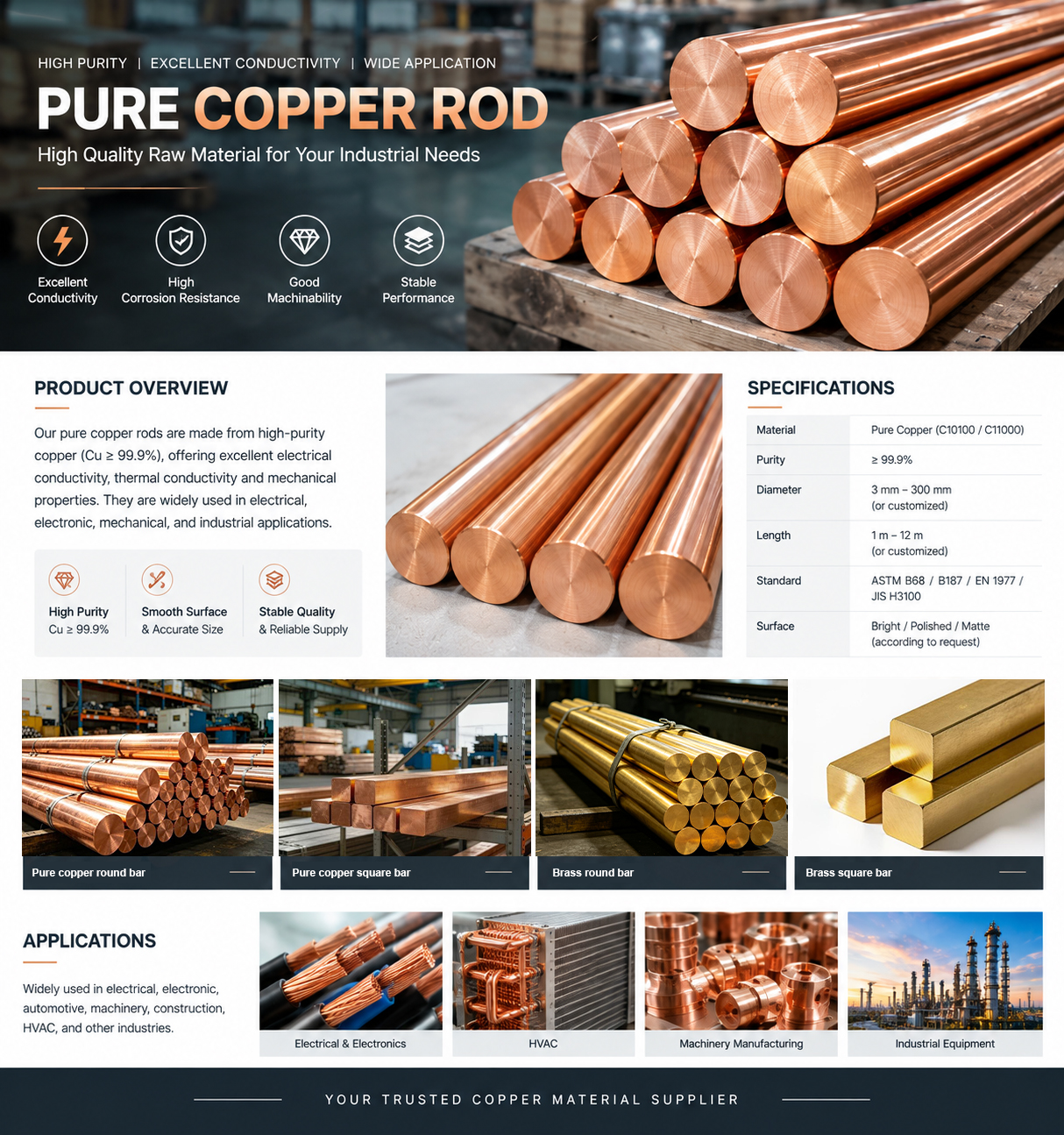
Selecting an appropriate grade begins with understanding composition ranges. Pure copper, known as tough-pitch copper, includes grades T1 (copper content ≥99.95%), T2 (≥99.90%), and T3 (≥99.70%), used mainly for general-purpose processed materials and electrical conductive components. Oxygen-free copper grades TU1 (≥99.97%) and TU2 (≥99.95%) carry extremely low oxygen content and serve electronics, vacuum applications, and high-specification welded components. Phosphorus-deoxidized copper grades TP1 and TP2 both maintain copper content of ≥99.90% and are deoxidized through phosphorus additions of 0.004%–0.040%, with TP2 being the most commonly applied grade for water pipes, gas lines, heat exchangers, and air conditioning tubing.
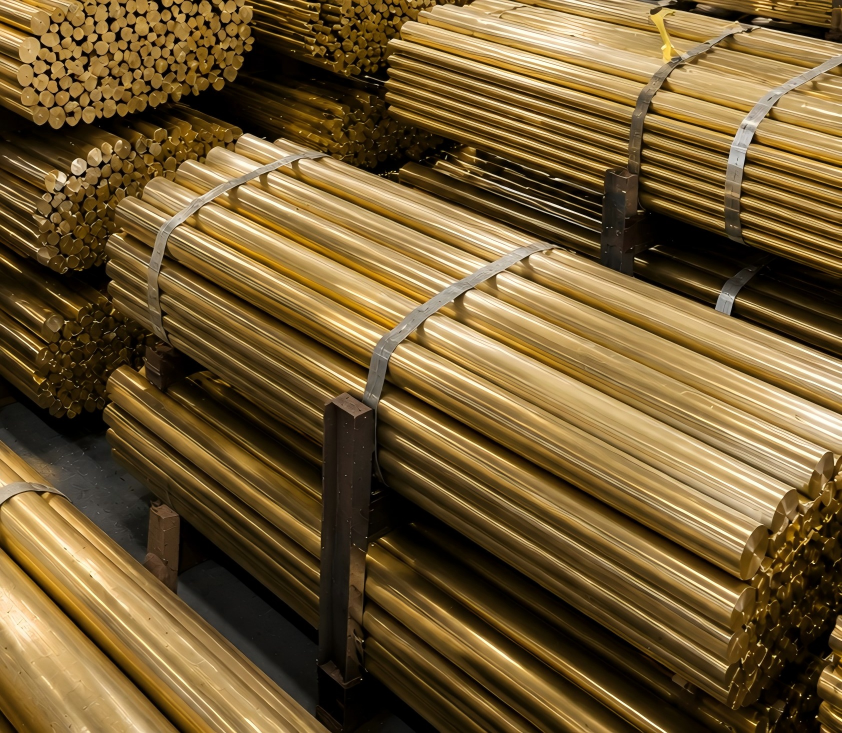
Brass, composed primarily of copper and zinc, spans grades H59 (57–60% copper) through H80 (79–81% copper), with corresponding ASTM equivalents also referenced: C11000 corresponds to electrolytic tough-pitch copper (Cu ≥99.90%, equivalent to T2), and C12200 corresponds to phosphorus-deoxidized copper (Cu ≥99.90%, equivalent to TP2). Brass grades C26000, C27000, and C28000 roughly correspond to H70, H66, and H60 respectively. As a general identification principle, prefixes T, TU, and TP denote pure copper, H denotes brass, and C-series designations beginning with C1 are typically pure copper while those beginning with C2 are typically brass.
For conductive busbars specifically, pure copper busbars such as TMY/T2 or the ASTM equivalent C11000 are the recommended category. Verification should focus on electrical conductivity—typically ≥46 m/(Ω·mm²) at 75°C—and straightness. When requesting a quotation, specifying the four key elements of "Grade + Temper + Cross-section + Standard" provides the clarity needed for accurate sourcing.
Deep Insights: Process Control, Temper Selection, and Risk Considerations for Cabinet Applications
Copper busbar manufacturing generally begins with copper cathode (electrolytic copper) of ≥99.95% copper content, with qualified scrap blended according to grade specifications. The typical process route for copper busbars runs: copper cathode → melting → upward casting (rod) → extrusion → drawing → cutting to length → inspection → warehousing. Hot working at approximately 800–950°C breaks down as-cast dendrites, eliminates porosity, and refines grains, while subsequent cold working—through drawing and cutting operations—introduces work hardening that requires carefully managed annealing steps to restore plasticity and control temper.
Temper designation is a critical specification for busbar performance. M (soft temper) offers high ductility and low strength, suited to bending and forming operations. Y2 (half-hard) results from cold working and offers a balance of strength and ductility with good structural support—a relevant consideration for busbars that must maintain rigidity within cabinet mounting systems. Y (hard temper) delivers high strength and rigidity but limited formability, while M2 (light soft) falls between soft and half-hard properties under the GB/T 1527 standard.
Key control points for busbars include straightness (for example, ≤0.5 mm/m), electrical conductivity, edge chamfering, and dimensional tolerances. A broader risk consideration across copper processing involves deoxidation control: incomplete deoxidation in phosphorus-deoxidized copper production risks porosity and hydrogen embrittlement, underscoring why oxygen content management remains a standardization priority across the copper supply chain, even as cabinet-grade busbars typically rely on tough-pitch or oxygen-free grades rather than phosphorus-deoxidized copper.
Company Value: How Jiangsu Xinxiangsheng Special Steel Supports Technical Decision-Making
Jiangsu Xinxiangsheng Special Steel Co., Ltd. structures its technical support around verifiable documentation and transparent pricing. The company can provide material and quality certificates covering chemical composition, mechanical properties, and electrical conductivity, and will issue third-party or commercial inspection reports upon request. Final-stage inspection and packaging procedures test chemical composition, mechanical properties, electrical conductivity, flaw detection, dimensions, and surface quality, followed by moisture-proof packaging and warehousing, with mandatory standard-compliant sampling and retention of test reports prior to shipment.
On pricing, the company applies a floating model described as "LME/SHFE Copper Price + Processing Fee," and can clarify the pricing cycle and the method used to lock in price (price-fixing) upon customer request. This combination of documented quality control and transparent, market-linked pricing is intended to give buyers a clear, verifiable basis for comparing conductive copper bar options against technical requirements.
Conclusion and Recommendations for Electrical Cabinet Procurement
Choosing a conductive copper bar for electrical cabinets involves more than selecting "copper"—it requires matching grade, temper, cross-section, and standard to the application’s electrical and mechanical demands. Pure copper grades such as T2/TMY or C11000 remain the primary reference point for busbar conductivity, with straightness and electrical conductivity (≥46 m/(Ω·mm²) at 75°C) serving as key verification metrics. Buyers are encouraged to request the four-element specification when seeking quotations, ask for material and quality certificates or third-party inspection reports, and clarify how floating copper pricing and price-fixing options apply to their orders. Understanding temper designations—particularly the distinction between soft, half-hard, and hard conditions—further helps align material selection with the mechanical demands of cabinet installation and long-term operation.
copper-xxs.com
Jiangsu Xinxiangsheng Special Steel Co., Ltd. -
AuthorPosts

- You must be logged in to reply to this topic.