- This topic is empty.
-
AuthorPosts
-
2026-11-13 at 8:33 am #66424
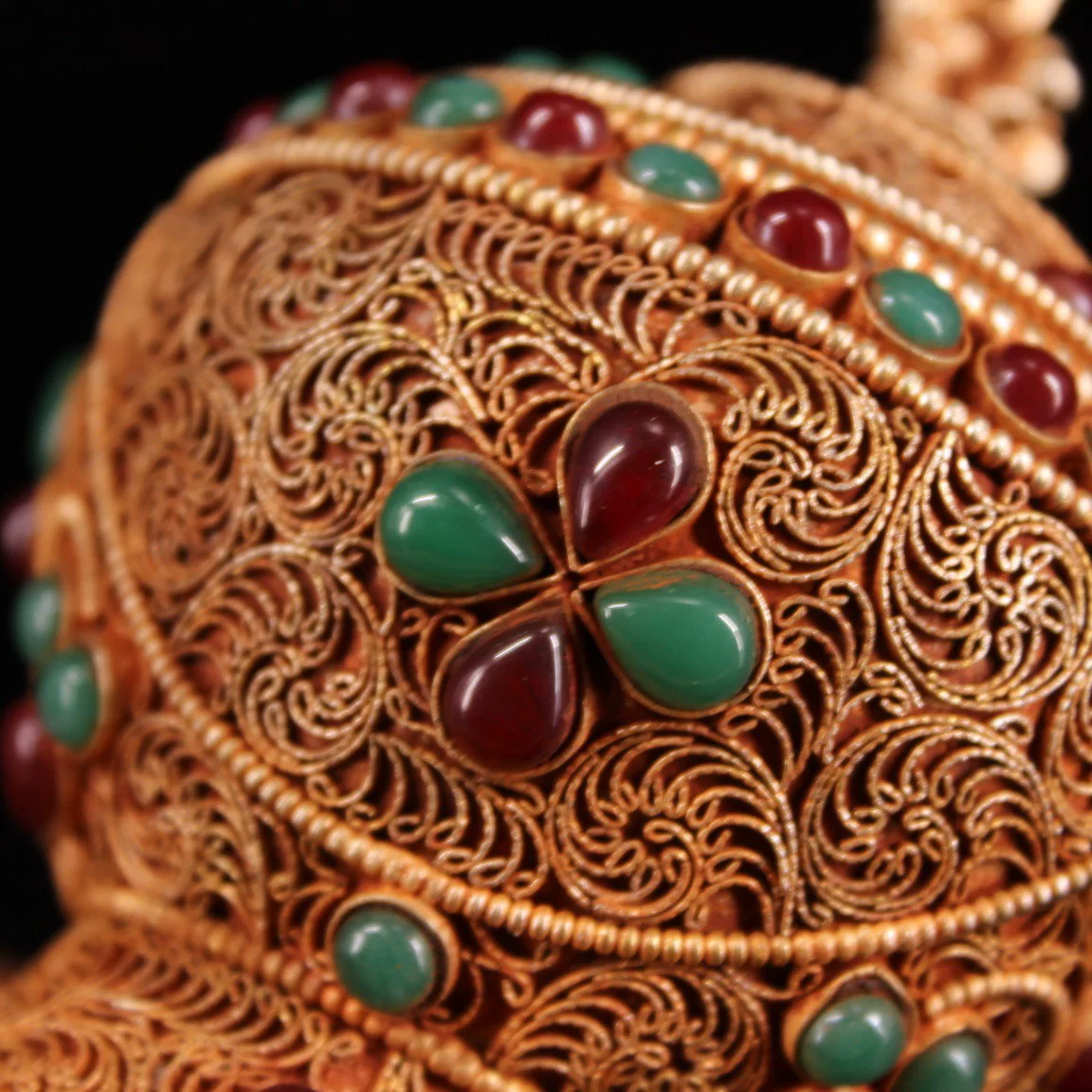
Creating a Buddhist altar or a quiet sacred space is not simply about arranging decorative objects. Each item should suit the available space, reflect the owner's intentions, and remain practical for daily use. A Gilt Copper Filigree Inlaid Multi-Gem Reliquary Pot, also known as a Tibetan handmade filigree treasure vase, offers a distinctive way to introduce traditional metalwork, symbolic details, and warm gold tones into a Buddhist altar display.
Featuring intricate openwork, red and green decorative gemstones, and a vajra-shaped lid ornament, this compact vessel can also be displayed in a meditation corner, tea room, or cultural art collection. The key is to position it thoughtfully, understand its decorative characteristics, and care for its delicate construction.
1. Choose the Right Place for Your Treasure Vase
Before arranging a Buddhist altar, consider the size of the space, the objects already present, and how the area will be used. A well-organized altar does not need to be large or crowded. A few carefully selected items can create a more balanced setting than a shelf filled with unrelated decorations.
The Tibetan filigree treasure vase measures approximately 7 cm wide and 11 cm high. Its compact dimensions make it suitable for small home altars, dedicated display shelves, and meditation spaces where surface area is limited.
On a Buddhist Altar
Place the vase on a stable, level surface where its decorative details can be seen clearly. Depending on the altar's layout and the customs of your Buddhist tradition, it may sit beside appropriate offering vessels, religious artwork, or other traditional objects.
Avoid placing it directly at the edge of a shelf. The openwork body and gemstone settings require protection from accidental knocks, especially in spaces where offerings are changed regularly or where several people use the altar.
If the altar follows a specific religious arrangement, consult the relevant practitioner or tradition before deciding where the vessel belongs. Decorative suitability does not automatically determine ritual placement.
In a Meditation Corner
A meditation corner often benefits from a simple arrangement with limited visual distractions. The vase's gold-toned finish gives the area a subtle focal point, while its detailed filigree adds texture without taking up much room.
A wooden shelf, a neutral-colored wall, or a plain display platform can help the vessel stand out. Leave some empty space around it instead of surrounding it with numerous small ornaments. This approach makes the craftsmanship easier to appreciate and keeps the area visually calm.
In a Tea Room or Cultural Display Cabinet
The vase is not limited to religious settings. Its traditional decorative style can also complement a tea room, antique cabinet, or collection of Asian metalwork.
In a tea room, pair it with natural wood, restrained furnishings, and a small selection of complementary objects. In a display cabinet, place it against a relatively plain background so that the openwork pattern remains visible.
For long-term display, use a secure shelf and keep the vessel away from frequently handled objects that could scratch the finish or strike the gemstone settings.
2. Understand the Design Before Arranging the Altar
The visual character of this treasure vase comes from the combination of its shape, metalwork, color, and lid ornament. Understanding these details helps you decide how it should relate to other objects in the space.
Gilt Copper with Intricate Filigree
The vessel is built on a copper base with a gilded surface. Fine metal elements form elaborate scrolling patterns across the body, creating a layered openwork effect.
Unlike a plain, solid-sided container, the filigree structure produces a more detailed appearance when viewed from different angles. Light can pass through the openings, revealing the pattern's depth and making the surface interesting even when the vessel is displayed on its own.
Hand chiseling, gem inlay, and careful assembly contribute to its finished appearance. Because these details are relatively delicate, the vase is best treated as a decorative craft object rather than a heavy-duty storage container.
Red and Green Decorative Gemstones
Red and green gemstone accents are arranged across the pot body, with additional colored stones around the base rim. Against the gold-toned metalwork, these colors create a clear contrast and give the vase a distinctive appearance.
When arranging an altar, consider how these colors relate to nearby objects. Neutral fabrics, wooden surfaces, and understated backgrounds can prevent the display from feeling overly busy.
The stones are described as decorative gemstones. Their precise mineral composition should be confirmed with the supplier if natural stone identification is important to your collection or purchasing requirements.
The Vajra-Shaped Lid Ornament
A three-dimensional vajra-shaped knob crowns the lid and serves as the vessel's main visual focal point. In Buddhist traditions, the vajra is associated with spiritual strength and indestructible wisdom, although its interpretation and ritual significance vary by context.
Keep the lid ornament unobstructed when positioning the vase. It should be possible to appreciate its shape without having to move nearby objects or handle the vessel unnecessarily.
Together, the filigree, gemstone accents, and vajra detail create a coherent design that works well in a traditional decorative setting.
3. What Does a Tibetan Treasure Vase Symbolize?
Traditional Tibetan Buddhist objects often combine craftsmanship with religious or cultural meaning. A treasure vase is associated in various Buddhist contexts with auspiciousness, abundance, preservation, and the accumulation of merit. The exact interpretation depends on the form of the object and the tradition in which it is used.
For this particular design, the product's stated symbolism can be understood through three main elements.
The treasure vase form represents the gathering and preservation of merit, purity, and auspicious intentions. Its enclosed body also gives it a practical role as a vessel for suitable small items.
The vajra ornament is associated with wisdom, compassion, and the overcoming of spiritual obstacles in the product's cultural interpretation. It gives the lid a symbolic detail beyond its decorative function.
The gilded finish and multicolored inlays convey radiance and solemnity. The red and green stones are presented as representing the perfection of the Seven Treasures in the supplied product description.
These associations can help owners appreciate the vase beyond its appearance. However, it is important not to assume that every decorative treasure vase has been consecrated or prepared for a specific religious practice. If you intend to use it ritually, confirm its suitability and placement with someone familiar with your tradition.
4. How to Create a Balanced Buddhist Altar Display
A balanced altar combines suitable objects with enough space for practical use. The following approach works well when incorporating a small filigree treasure vase into an existing arrangement.
Start with a Clean, Stable Surface
Choose a dry altar or display platform that can support the vessel securely. Remove unnecessary clutter before arranging the objects. A clean background makes the vase's intricate patterns easier to see.
Establish a Clear Focal Point
If the altar already has a principal image or another focal object, arrange the treasure vase so that it complements rather than competes with it. Follow the layout customary in your practice, and avoid placing decorative items where they obstruct religious images or interfere with offerings.
For a purely decorative display, the vase can be positioned centrally on a small shelf or slightly to one side of a larger arrangement. The best placement depends on the surrounding objects and available space.
Coordinate Materials and Colors
Gilt copper pairs naturally with wood, dark display surfaces, and neutral-colored textiles. The red and green stones provide additional color, so surrounding decorations can remain relatively restrained.
There is no need to match every object exactly. Instead, aim for a consistent overall appearance in which each piece has enough room to be seen.
Leave Space for Daily Use
An altar should remain functional. If you regularly replace offerings, clean the surface, or perform other devotional activities, leave sufficient working space around the vessel.
Avoid placing the vase where sleeves, offering trays, or other frequently moved objects are likely to catch its protruding lid ornament or gemstone settings.
5. Can the Vase Hold Offering Items?
The vessel has an inner cavity that can accommodate small, suitable items. Its lidded construction makes it useful for keeping selected dry offering-related objects together while maintaining a finished appearance on the altar.
However, its dimensions are modest, so the storage capacity is limited. It is better suited to small items than to bulky contents.
Before using the inner cavity, consider the nature of the intended contents. Damp materials, liquids, acidic substances, and other potentially reactive items may damage the metal finish or leave residue that is difficult to remove.
Do not assume that the vase is suitable for food storage, burning materials, or direct contact with flames. The product is primarily intended for display, collection, and appropriate offering-related storage. Any specialized ritual use should be confirmed separately.
6. Caring for Your Gilt Copper Filigree Treasure Vase
Proper care is especially important for a decorative vessel with fine openwork and multiple inlaid stones. A few straightforward precautions can help maintain its appearance.
Keep it dry. Place the vase away from damp walls, condensation, and areas where water is frequently splashed.
Handle it by the body or base. Support the vessel securely when moving it. Do not lift it by the vajra-shaped lid knob.
Protect the gemstone settings. Avoid impact, pressure, and contact with hard objects that could loosen or damage the decorative inlays.
Avoid harsh chemicals. Acidic, alkaline, abrasive, or strong cleaning products may affect the finish and decorative components.
Remove dust gently. Use a soft, dry cloth and avoid vigorous rubbing across the filigree or gilded surface.
Keep it away from high temperatures. Do not position it near open flames, heaters, or other sources of intense heat.
For a valuable collection or an older metalwork object, consult a qualified conservator before attempting polishing, chemical cleaning, or repairs. Aggressive treatment can remove surface finishes or cause further damage to delicate components.
7. Product Details for Collectors and Buyers
If you are considering this vase for a home altar, a cultural collection, or a decorative retail display, the following specifications provide a useful reference.
Item
Product details
Product name
Gilt Copper Filigree Inlaid Multi-Gem Reliquary Pot
Alternative name
Tibetan Filigree Treasure Vase
Brand
Star Rhyme Ceramics
Model
XY-HSXQ-015
Main material
Copper with a gilded finish
Decorative techniques
Openwork filigree, hand chiseling, gemstone inlay, and assembly
Main colors
Gold, red, and green
Lid detail
Three-dimensional vajra-shaped knob
Width
Approximately 7 cm
Height
Approximately 11 cm
Unit
Piece
Intended uses
Buddhist altar display, cultural decoration, collection, and suitable small-item storage
For purchasing decisions, confirm the finished dimensions, gemstone composition, surface treatment, packaging, and available order quantities directly with the supplier. These details are particularly important when the vessel will be displayed alongside other collectible objects or sold through a retail business.
8. Sourcing Tibetan-Inspired Decorative Crafts from China
For retailers, cultural gift shops, interior designers, and wholesale buyers, product appearance is only one part of the sourcing decision. Material specifications, production consistency, packaging, communication, and delivery arrangements also matter.
Xingyun's official website, Oriental Porcelain Art, is a useful starting point for exploring its decorative art offerings and company information. Buyers interested in this type of treasure vase should confirm the specific product's brand ownership, manufacturing location, and supply arrangements rather than assuming that all items listed by a business are made in the same factory.
Before placing a wholesale inquiry, consider asking the supplier:
Is the vessel manufactured in-house or sourced from a partner workshop?
What copper material and gilding process are used?
What are the gemstone materials and attachment methods?
Are samples available for inspection before a larger order?
What are the minimum order quantity, production lead time, and packaging options?
Can the supplier provide clear photographs and confirm the finished dimensions?
For delicate metalwork, protective packaging is particularly important. The openwork structure and gemstone settings can be vulnerable to pressure and impact during transit, so the packaging method should be appropriate for the product's construction.
A reliable sourcing process begins with verifiable product information and clear communication. This is more useful than relying on broad claims about handmade quality or manufacturing capability.
Incorporating a Tibetan handmade filigree treasure vase into a Buddhist altar or sacred space is primarily a matter of thoughtful placement, suitable surroundings, and respectful use. The Gilt Copper Filigree Inlaid Multi-Gem Reliquary Pot combines a compact 7 cm by 11 cm form with elaborate gilt copper openwork, red and green decorative gemstones, and a vajra-shaped lid ornament.
These details make it suitable for carefully arranged Buddhist altars, meditation corners, tea rooms, and cultural art displays. Its traditional design provides visual interest, while its symbolic associations offer additional context for those who appreciate Buddhist-inspired craftsmanship.
Place the vessel on a stable, dry surface, allow its details to remain visible, and handle it gently to protect the delicate metalwork and inlays. Whether selected for personal appreciation or evaluated for a decorative art collection, it is best enjoyed as an object whose craftsmanship and cultural context deserve equal attention.
To review the product's design and specifications, visit the Tibetan Handmade Filigree Treasure Vase product page.
-
AuthorPosts

- You must be logged in to reply to this topic.